



How Telecom billing works
Reading time: 5 minutes
- Overview of Telecom Billing
Telecom billing is the process by which telecommunications service providers (e.g., mobile, internet, or landline companies) calculate, generate, and collect payments for services used by customers.
It involves tracking usage, applying tariffs, generating invoices, and managing payments while ensuring accuracy and regulatory compliance.
- Key Components of Telecom Billing
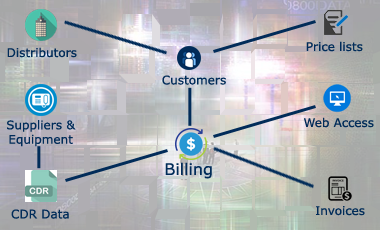
Customer Account Management: Each customer has an account linked to their services (e.g., mobile number, broadband plan). This includes personal details, service plans, and billing preferences.
Service Usage Tracking: Systems monitor customer usage, such as call duration, data consumption, SMS, or additional services like roaming or premium content.
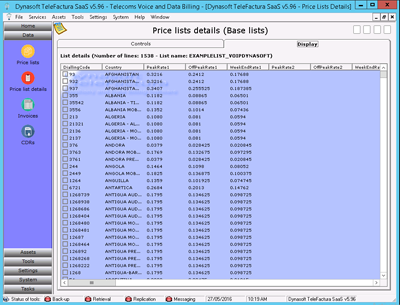
Rating and Charging: Usage data is processed to calculate charges based on predefined tariffs, plans, or promotional offers.
Invoice Generation: Bills are compiled, detailing usage, charges, taxes, and any discounts or adjustments.
Payment Processing: Customers settle bills via various methods (e.g., credit card, bank transfer, mobile apps). This includes handling late payments or disputes.
Customer Support: Resolving billing inquiries, disputes, or adjustments through call centers or online portals.
- Telecom Billing Process
Step 1: Usage Data Collection
Network elements (e.g., switches, routers) record usage events, such as call details (CDR – Call Detail Records) or data usage logs.
Data is collected in real-time or batch mode and stored in a mediation system.
Step 2: Mediation
The mediation system validates, formats, and aggregates raw usage data for compatibility with a billing system such as TelecomBilling.Net.
It filters out errors and ensures only billable events are processed.
Step 3: Rating
TelecomBilling.Net applies pricing rules to usage data, factoring in:
Subscription plans (e.g., unlimited calls, 5GB data).
Variable rates (e.g., per-minute charges for international calls).
Discounts, bundles, or promotions.
Step 4: Billing and Invoicing
Charges are aggregated to create a customer invoice, including:
Recurring fees (e.g., monthly plan cost).
Usage-based charges (e.g., excess data).
One-time fees (e.g., activation, equipment).
Taxes and regulatory surcharges.
Invoices are sent via email, app, or physical mail.
Step 5: Payment Collection
Customers pay through online portals, autopay, or third-party services.
Operators manage overdue accounts, send reminders, or apply penalties for late payments.
Step 6: Dispute Resolution
Customers can raise disputes (e.g., incorrect charges) via support channels.
Operators investigate, adjust bills if needed, and communicate resolutions.
- Types of Telecom Billing
Prepaid Billing:
Customers pay in advance for services.
Usage is deducted from the balance in real-time.
Requires top-ups to continue service.
Postpaid Billing:
Customers use services and are billed at the end of a billing cycle (e.g., monthly).
Invoices reflect accumulated usage and fixed charges.
Convergent Billing:
Combines prepaid and postpaid services into a single platform, allowing flexibility (e.g., prepaid mobile with postpaid broadband).
- Technologies and Systems
Billing Support Systems (BSS): Software platforms (e.g., TelecomBilling.Net) manage billing, customer relationships, and revenue.
Customer Relationship Management (CRM): Tracks customer interactions and billing queries.
Mediation Platforms: Process raw usage data for billing systems such as TelecomBilling.Net.
Payment Gateways: Securely handle transactions.
Analytics Tools: Monitor usage patterns, detect fraud, and optimize pricing.
- Challenges in Telecom Billing
Data Accuracy: Ensuring precise usage tracking and error-free billing.
Complexity: Managing diverse plans, promotions, and regulatory requirements across regions.
Customer Experience: Providing clear, transparent bills and quick dispute resolution.
Fraud Prevention: Detecting and mitigating fraudulent activities like unauthorized usage.
Scalability: Handling large volumes of data as customer bases grow.
- Regulatory and Compliance Considerations
Telecom billing must comply with local regulations, such as tax laws, consumer protection rules, and data privacy (e.g., GDPR in Europe).
Bills must be transparent, detailing charges and usage clearly.
Operators must provide mechanisms for dispute resolution and adhere to service quality standards.
- Future Trends
Automation and AI: Using AI for predictive billing, fraud detection, and personalized offers.
5G and IoT: Billing for new services like smart devices and high-speed data.
Real-Time Billing: Instant usage tracking and charging, especially for prepaid and dynamic plans.
Subscription Models: Shift toward bundled services (e.g., mobile + streaming).
This outline provides a concise overview of telecom billing, covering its processes, technologies, challenges, and trends. For deeper insights, specific areas like billing systems or regulatory compliance can be explored further.
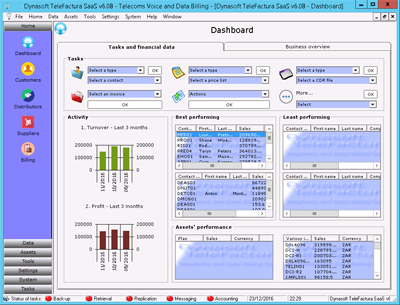
Learn how you can leverage TelecomBilling.Net in your Telecom operations and how it can help you maximise your revenue and time spent managing your customer base.